

Skin and anti-aging peptides are short signaling molecules studied for collagen synthesis, matrix metalloproteinase modulation, and wound-repair cascades in dermatological research.
Skin & Anti-Aging
All products listed under this goal are supplied for in vitro laboratory research only and are not intended for human consumption or therapeutic use.
Topical peptides for skin renewal — premium on the shelf, lab-verified quality on the label.
Topical peptides chosen for skin renewal — premium formulations with lab-verified quality and clear application guidance.
- How are topical peptides different from a regular serum?
- What testing do these formulations go through?
- How should I apply and store them?
A short list of peptides that fit this goal.
We keep the choice focused. Every peptide here has a clear purpose, ISO/IEC 17025 lab testing, and a product page written without jargon.
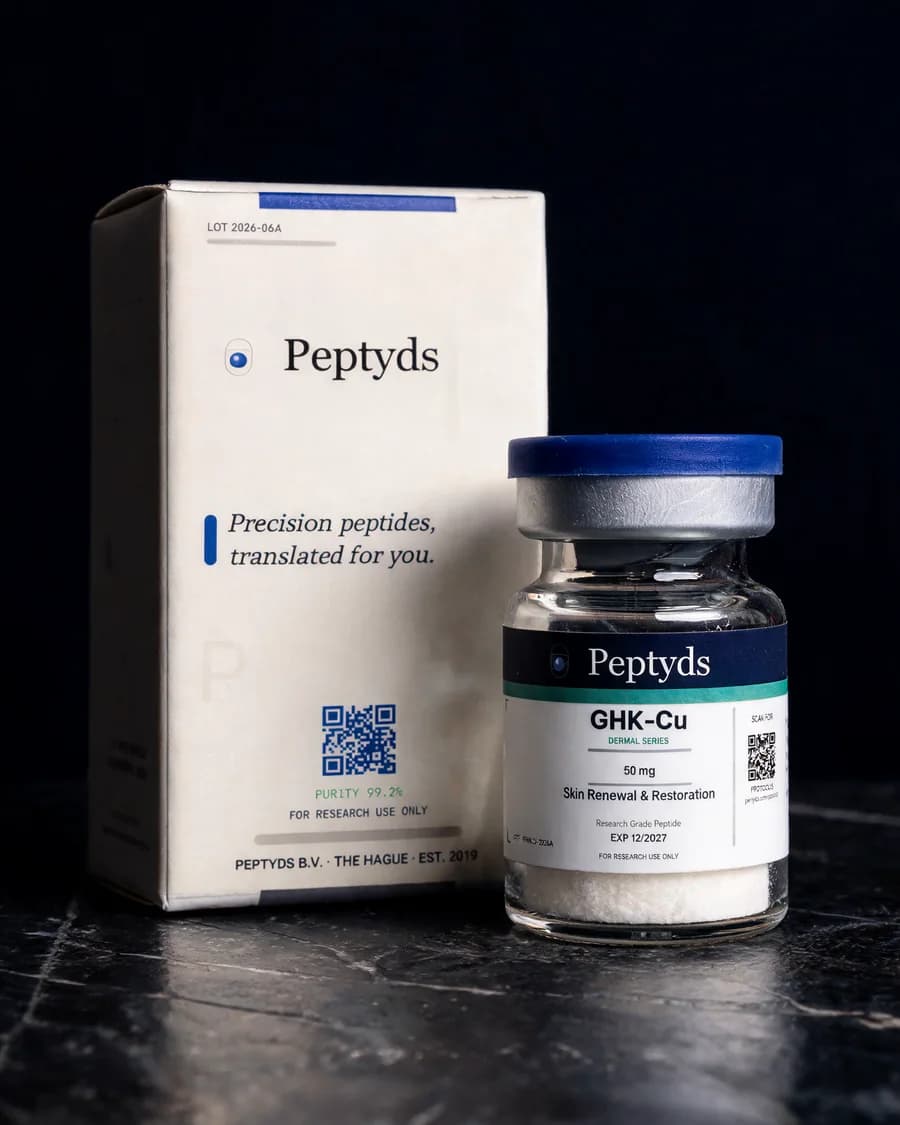
A copper-peptide complex studied for skin barrier support, collagen signalling, and visible texture renewal.
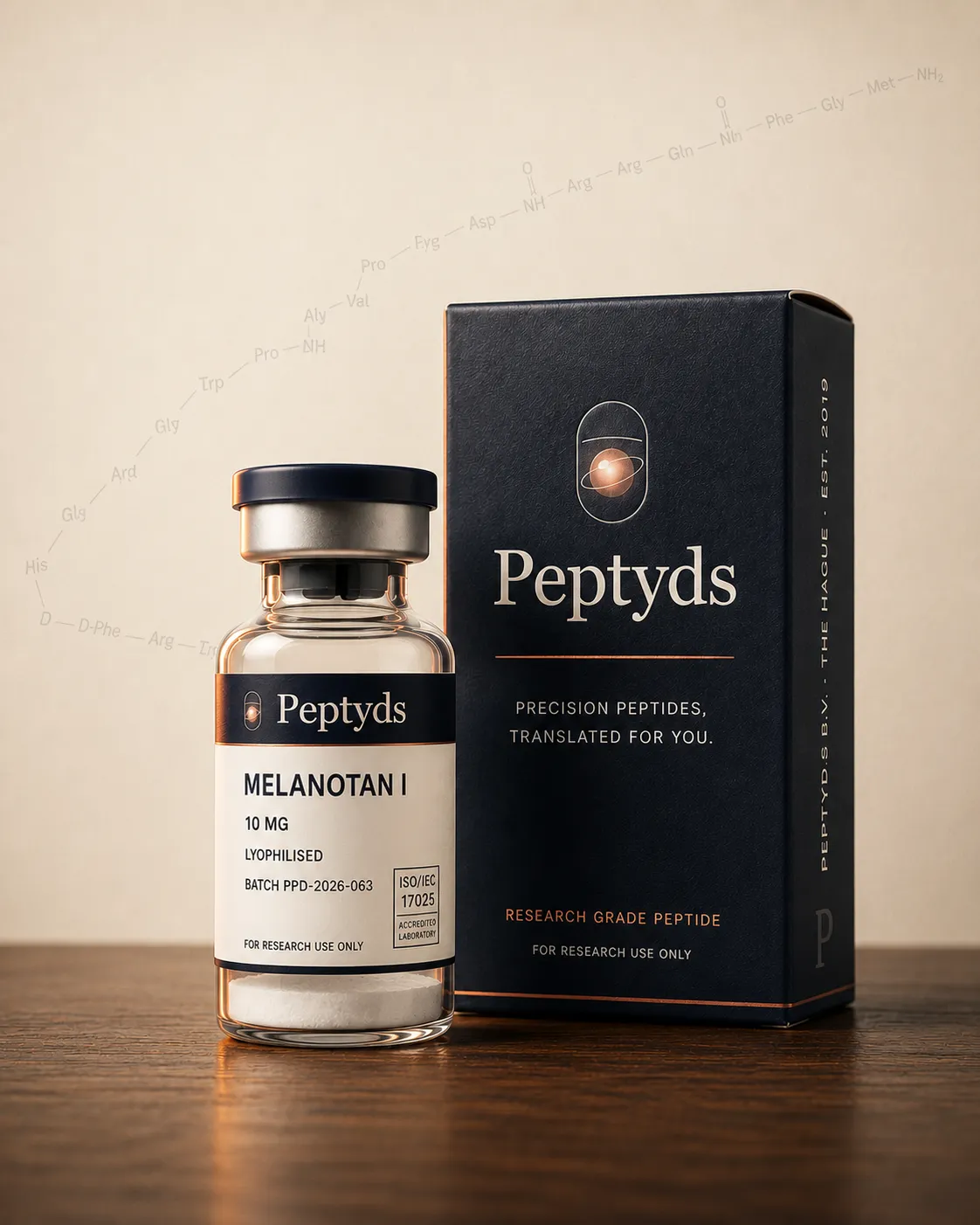
Melanogenesis & Photoprotection Research.
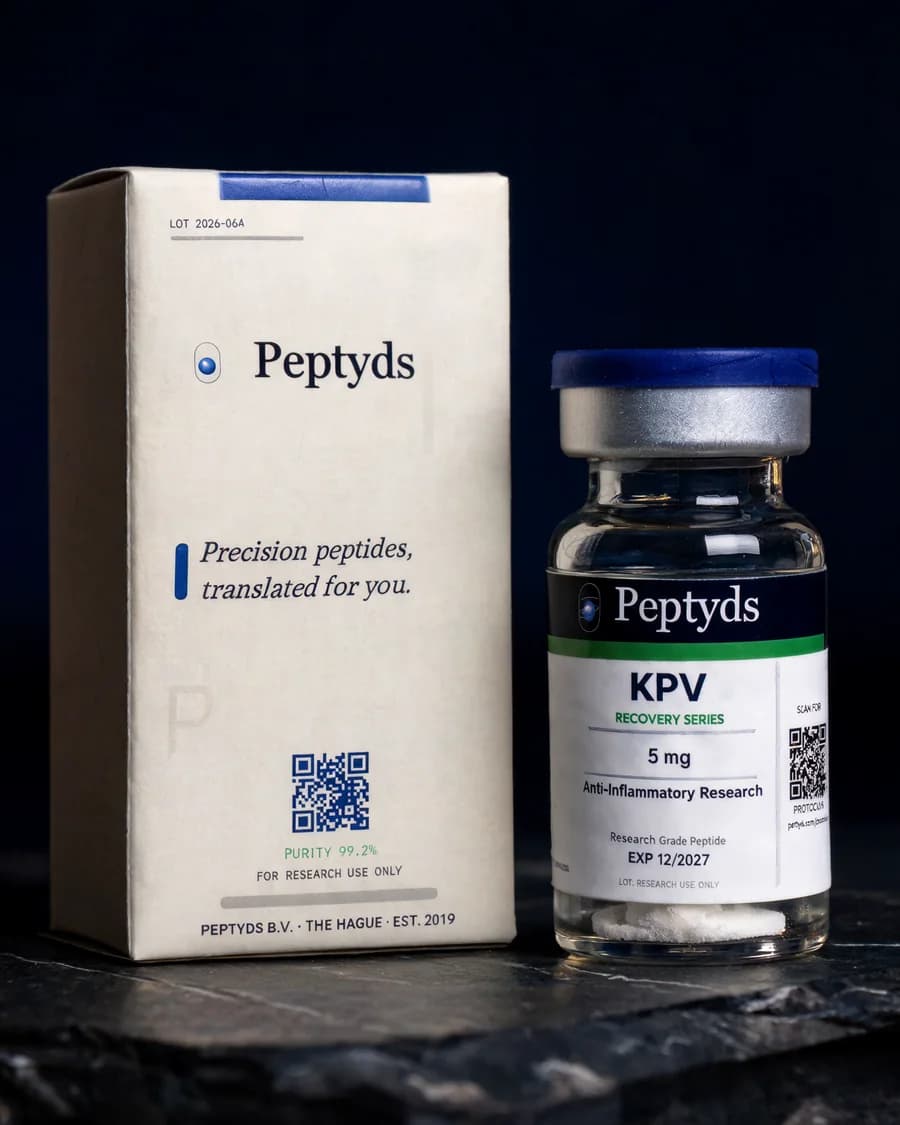
An alpha-MSH-derived tripeptide studied for its anti-inflammatory properties across gut, skin, and systemic inflammatory signalling pathways.
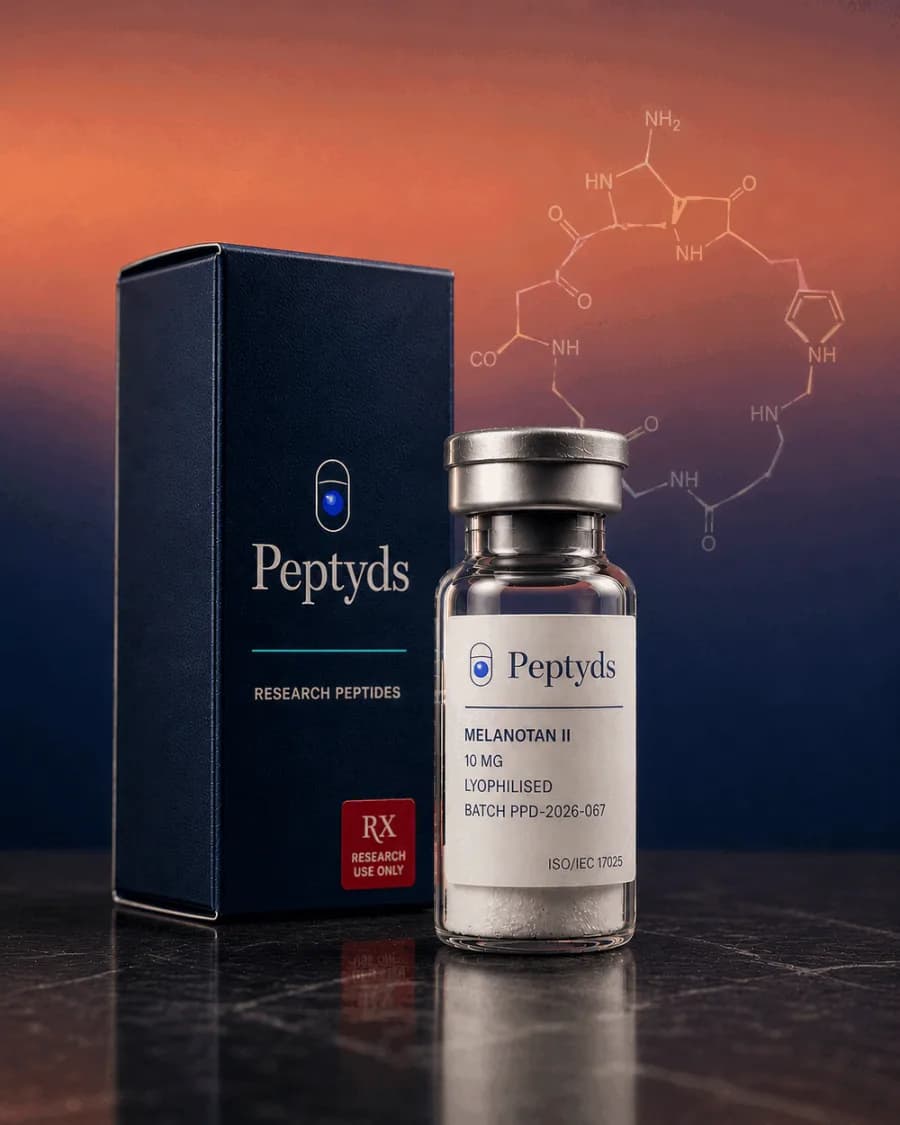
A melanocortin receptor agonist studied for its effects on melanogenesis, sexual function, and appetite regulation through MC1R–MC4R pathway activation.
- skin-renewal
- application-guidance
Each release is matched with quality documentation through a documented verification path. Identity, purity, and composition test results sit on the product page before you buy.
Every batch is verified by an ISO/IEC 17025-accredited laboratory before release. Identity, purity, and documentation travel with the product — not behind a form.
A calm buyer's guide to CoA basics: what to check, what a purity number can and cannot prove, and how Peptyds routes quality proof.
GHK-Cu has a real skin-research footprint, but formulation, route, and evidence limits still matter.
The numbering suggests a sequel. The pharmacology says otherwise: one binds narrowly, the other binds across a receptor family that governs far more than pigmentation.
Goal-led shopping helps guided buyers compare research context, quality proof, and product fit without decoding every molecule first.
Most storage mistakes are not dramatic. They are small process failures: unclear instructions, moisture exposure, light, and avoidable temperature swings.
Peptides are short chains of amino acids — typically 2 to 50 — joined by peptide bonds. Smaller than proteins, larger than single amino acids.
PT-141 and Melanotan II share a chemical family but split completely on regulatory approval and safety. The mole-and-melanoma question is not optional reading.
GHK-Cu and BPC-157 both show up in 'best peptide for skin' searches, but they sit in different research neighbourhoods and use different delivery routes.
GLOW is an online name for a GHK-Cu, BPC-157 and TB-500 combination. Each peptide has its own, mostly preclinical literature. The combination itself has no published study behind it.
Melanotan II began as a superpotent α-MSH analogue in a university lab. It was never authorised as a medicine, its human trials were tiny, and its case-report file keeps growing. This guide separates the pharmacology from the tanning-forum lore.
Skincare peptides are real, studied molecules. Most of the evidence comes from small, short cosmetic trials, and getting a peptide through the skin barrier is the part that is still unsolved.
KLOW is an online name for GLOW (GHK-Cu, BPC-157 and TB-500) plus a fourth peptide, KPV. KPV has its own preclinical literature on inflammation; the four-peptide combination itself has no published study behind it.
KPV is a three-amino-acid fragment of alpha-MSH studied for anti-inflammatory signalling in gut, skin and immune research — distinct from tanning peptides like Melanotan II. Here is what the cited literature actually shows.
GHK-Cu's published safety record splits sharply by route: reassuring small-scale topical and laboratory evidence on one side, and an explicit FDA note about limited human data for injected GHK-Cu on the other.
Questions people ask about this category.
Honest, short answers to the things most shoppers want to know before they buy.
Melanotan II is not approved by the EMA, FDA, MHRA, or TGA, and regulators have issued consumer warnings citing unregulated supply chains and changes to existing moles. Case reports have described new or rapidly evolving naevi and isolated melanoma cases temporally linked to use, though causation is not established.
Across published trials and case series, the most frequent reported events are injection-site reactions (redness, induration, transient discomfort), headache, mild nausea, and temporary fatigue. GLP-1 and dual-agonist class peptides add dose-dependent gastrointestinal effects.
Peptides are not appropriate for anyone who is pregnant, nursing, planning conception, under 18, managing active cancer, or on immunosuppressants — and competitive athletes governed by WADA must avoid every peptide on the prohibited list. Anyone with a personal or family history of melanoma should specifically avoid melanocortin-receptor agonists.