

Weight and metabolic-support peptides are short signaling molecules studied for incretin receptor activation, satiety signaling, and glycemic control in clinical research.
Weight / Metabolic Support
All products listed under this goal are supplied for in vitro laboratory research only and are not intended for human consumption or therapeutic use.
Peptides that support metabolic balance and body composition — explained without the supplement-store noise.
A short catalogue of peptides that support metabolic balance — each with clear dosage, research links, and a documented quality process.
- What's the difference between metabolic support and body composition?
- Which peptide should I look at first?
- Where can I see the lab results for each batch?
A short list of peptides that fit this goal.
We keep the choice focused. Every peptide here has a clear purpose, ISO/IEC 17025 lab testing, and a product page written without jargon.
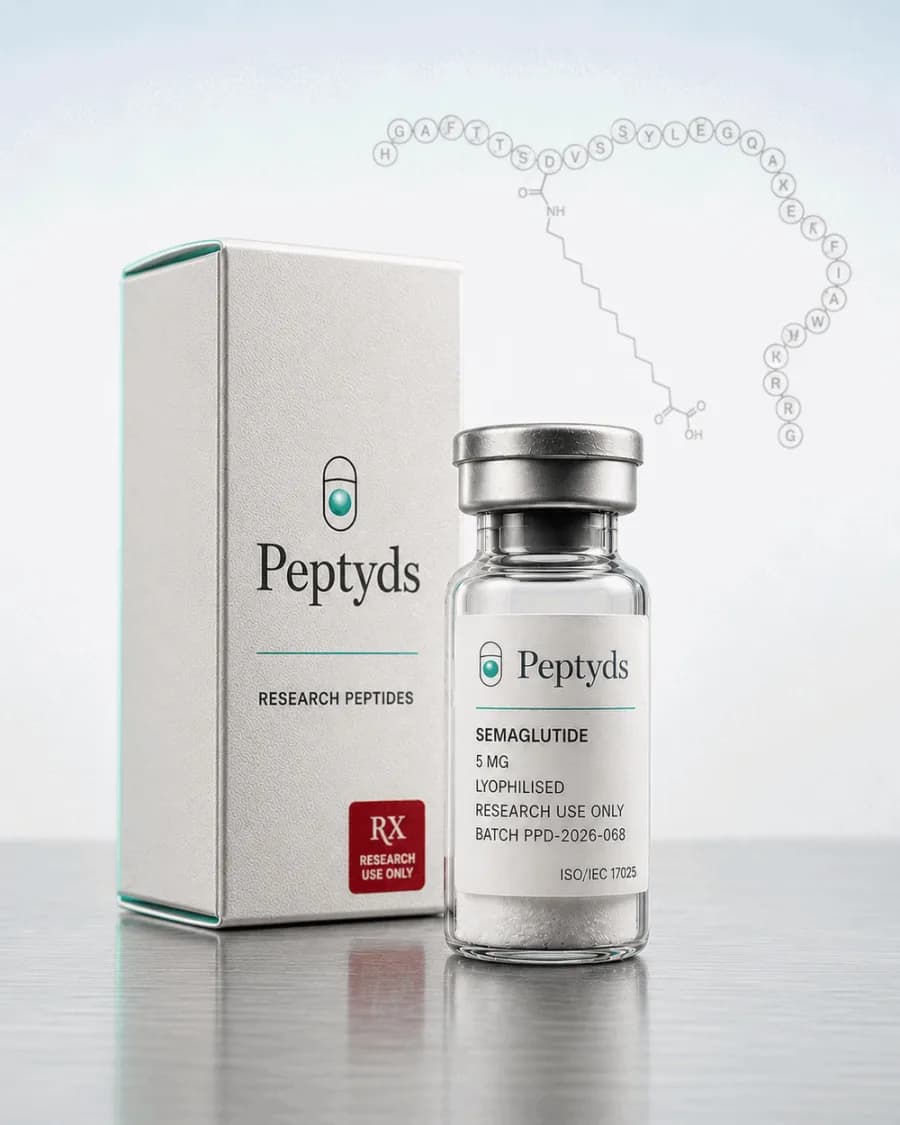
A GLP-1 receptor agonist studied for its effects on appetite regulation and metabolic signalling — investigated in weight and metabolic support contexts.
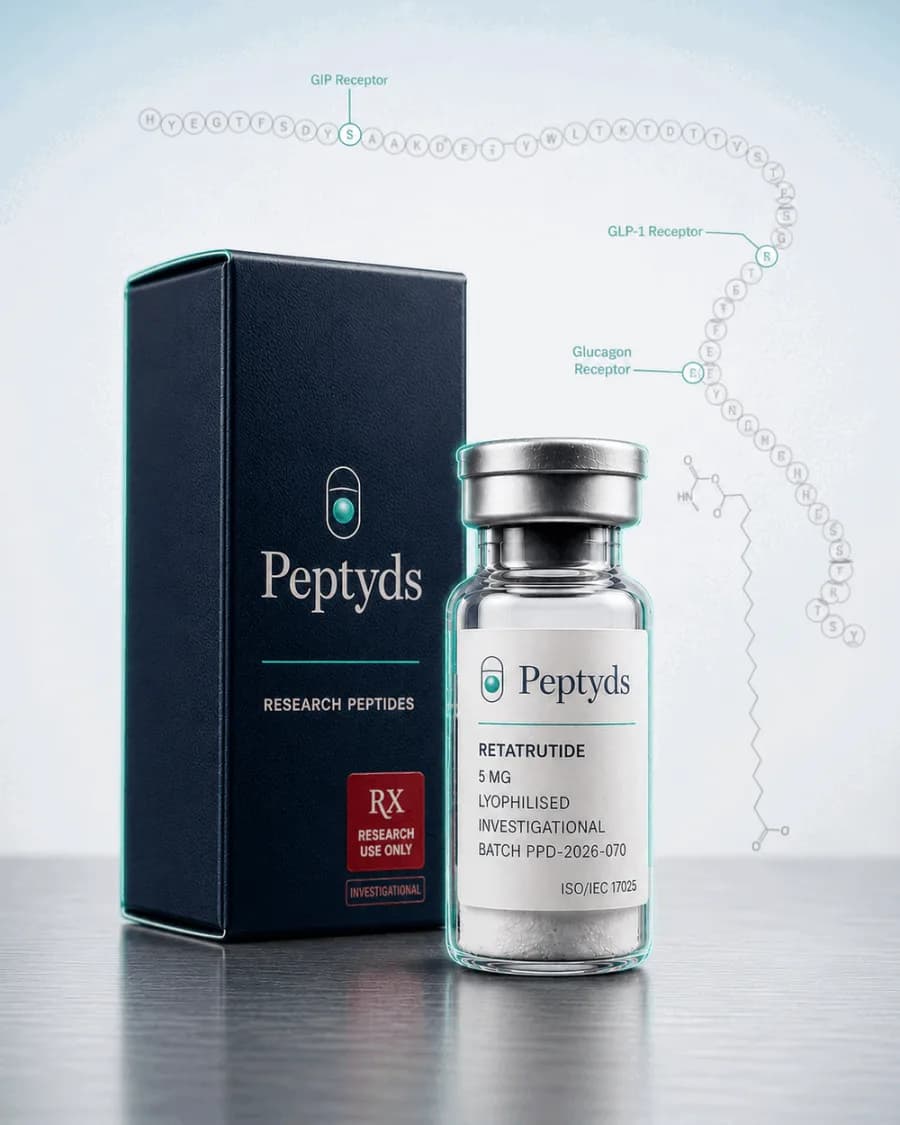
A triple agonist peptide targeting GIP, GLP-1, and glucagon receptors — studied in advanced metabolic and weight-regulation contexts.
A GHRH analogue studied for visceral fat reduction and body-composition support — used in clinician-supervised metabolic and growth hormone contexts.
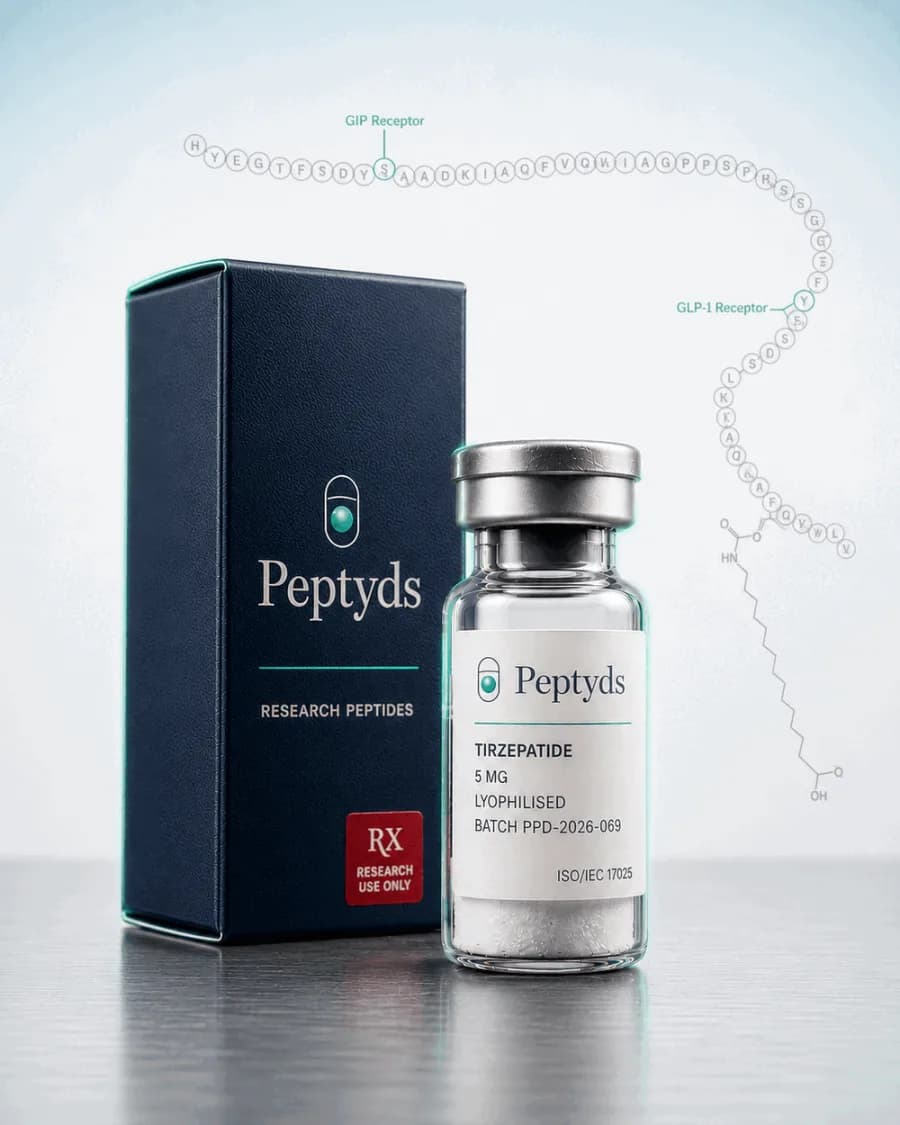
A dual GIP/GLP-1 receptor agonist studied for its effects on appetite regulation, metabolic balance, and body composition — framed for clinician-guided routines.
- metabolic-signalling
- goal-led-discovery
Each release is matched with quality documentation through a documented verification path. Identity, purity, and composition test results sit on the product page before you buy.
Every batch is verified by an ISO/IEC 17025-accredited laboratory before release. Identity, purity, and documentation travel with the product — not behind a form.
Lyophilization is about stability, moisture control, and transport confidence - not drama around fragile vials.
Cold-chain shipping is a quality system: packaging, handover, delivery timing, and exception handling all matter.
GLP-1 is no longer one simple bucket. Semaglutide, tirzepatide, and retatrutide sit in different evidence and mechanism contexts.
Three GLP-1 family peptides, three different receptor mechanisms, three different regulatory positions in Europe. Here is what the published trials and the EMA EPARs actually say.
The two are usually compared on one number — how much weight came off. That number favours retatrutide, and it is also the least useful basis for choosing between them.
This pairing sets the widest gap in the GLP-1 family: one receptor against three, and a decade of authorised use against a single published phase 2 trial.
Goal-led shopping helps guided buyers compare research context, quality proof, and product fit without decoding every molecule first.
Most storage mistakes are not dramatic. They are small process failures: unclear instructions, moisture exposure, light, and avoidable temperature swings.
Five concrete checks before checkout: batch CoA from an independent lab, EU fulfilment, temperature handling, transparent storage info, identifiable seller.
Tesamorelin is the rare GHRH analogue with a randomised-controlled-trial dataset behind it — but only in one specific clinical population. The honest version separates that data from the consumer marketing.
Mazdutide and retatrutide share a glucagon-receptor arm and a developer, but not a receptor count, a regulatory file or a trial population. This is what the published data can and cannot compare.
Most 'weight loss peptides' talk is really about one family: GLP-1-based incretin peptides. Here is what their trials show, what happens when treatment stops, and where tesamorelin and MOTS-c actually fit.
Retatrutide is the most-discussed investigational weight-loss peptide online. The published record is narrower than the hype: strong phase 2 data, a first phase 3 trial in diabetes, and open questions on long-term safety.
Cagrilintide is the long-acting amylin analogue behind Novo Nordisk's CagriSema programme. Peptyds does not sell it — this guide separates the phase 2 and phase 3 trial data from the headlines.
Retatrutide is not an approved retail medicine, so a vial's label is not proof of what is inside. Here is how mass spectrometry confirms identity, how HPLC estimates purity, and what published testing of grey-market GLP-1 products has actually found.
Eloralintide and retatrutide share a developer and a target disease, but not a hormone system, a receptor count or a trial phase. This is what the published data can and cannot compare.
Mazdutide is the GLP-1/glucagon dual agonist that won China's first approval in this class, with a trial record that starts well before the compound everyone compares it to. This is what the published evidence shows, on its own terms.
Tesamorelin and ipamorelin both end at the same pituitary GH pulse, but they start from different receptors and carry very different evidence: one has a positive HIV-lipodystrophy trial behind an FDA approval, the other has a negative ileus trial and a selectivity claim that is still animal-only.
Amycretin — now also carrying the assigned name zenagamtide — is Novo Nordisk's unimolecular GLP-1 and amylin receptor agonist. Here is what its published trials show, and where its phase 3 programme stands.
AOD-9604 is a modified fragment of human growth hormone, developed to isolate its fat-metabolising effect from its growth-promoting one. The animal data looked promising. The pivotal human obesity trial did not confirm it.
Nine GLP-1-pathway obesity molecules beyond semaglutide and tirzepatide, grouped by mechanism, each with its most advanced published trial result and regulatory status as of September 2026.
Orforglipron is Eli Lilly's oral GLP-1 receptor agonist — a small molecule, not a peptide, now FDA-approved for weight management. Here is the mechanism, the published trial record, and how it compares with the peptide GLP-1s Peptyds supplies for research.
Survodutide is Boehringer Ingelheim's glucagon/GLP-1 dual agonist, tested in obesity and in MASH under the SYNCHRONIZE and LIVERAGE trial programmes. This is what the published phase 2 and phase 3 evidence shows, and where it stood as of September 2026.
Questions people ask about this category.
Honest, short answers to the things most shoppers want to know before they buy.
Research-only means the compound has not been approved by the EMA or any national medicines authority for medical use, and is sold solely for in-vitro and laboratory research. It is not a supplement, a cosmetic, or a medicine, and it carries no claims for human consumption.
Semaglutide is a single GLP-1 receptor agonist; tirzepatide is a dual GLP-1 and GIP receptor agonist, which is associated with larger weight reductions in head-to-head trials — roughly 20–22 percent versus 15 percent over 72 weeks in SURMOUNT-5. Both are EMA-approved as prescription medicines (Wegovy/Ozempic and Mounjaro).
No. Retatrutide is a triple agonist of GLP-1, GIP, and glucagon receptors developed by Eli Lilly and currently in Phase 3 trials (TRIUMPH programme). It is not approved by the EMA or FDA, so it cannot be prescribed. Phase 2 data showed up to ~24 percent body-weight reduction at 48 weeks.
Across SUSTAIN, SURPASS, SURMOUNT, and TRIUMPH trials, the dominant adverse events for semaglutide, tirzepatide, and retatrutide are gastrointestinal: nausea, vomiting, diarrhoea, constipation, and abdominal discomfort, usually mild-to-moderate and concentrated during dose titration.
A prescription peptide (e.g. Wegovy, Mounjaro, Vyleesi, Zadaxin in the relevant jurisdictions) has been through EMA or national-authority review, carries an authorised indication, and is dispensed by a pharmacy against a script. A research peptide is a reference-grade compound sold for laboratory use only.