

Inflammation-support peptides are short signaling molecules studied for anti-inflammatory cascades, gut-lining repair, and cytokine balance in research contexts.
Inflammation Support
All products listed under this goal are supplied for in vitro laboratory research only and are not intended for human consumption or therapeutic use.
Peptides that help the body manage inflammation and recover calmly.
Peptides chosen to support calm, repair-oriented recovery — each with lab-verified quality checks and clear guidance on use.
- Which peptides are used for inflammation-focused recovery?
- What research is available for each one?
- How are dosage and quality handled?
A short list of peptides that fit this goal.
We keep the choice focused. Every peptide here has a clear purpose, ISO/IEC 17025 lab testing, and a product page written without jargon.
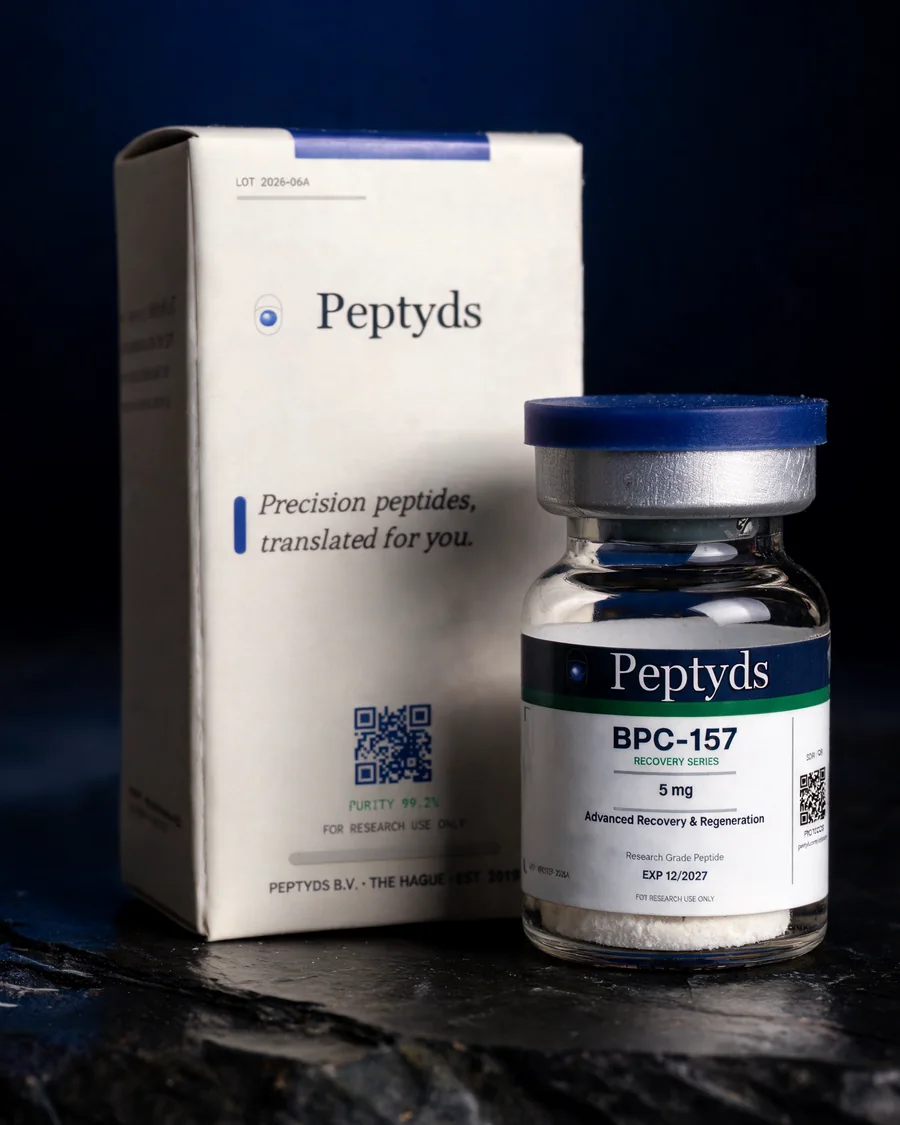
A recovery-focused peptide studied for its role in supporting the body's natural repair response — tendons, soft tissue, and gut-lining integrity.
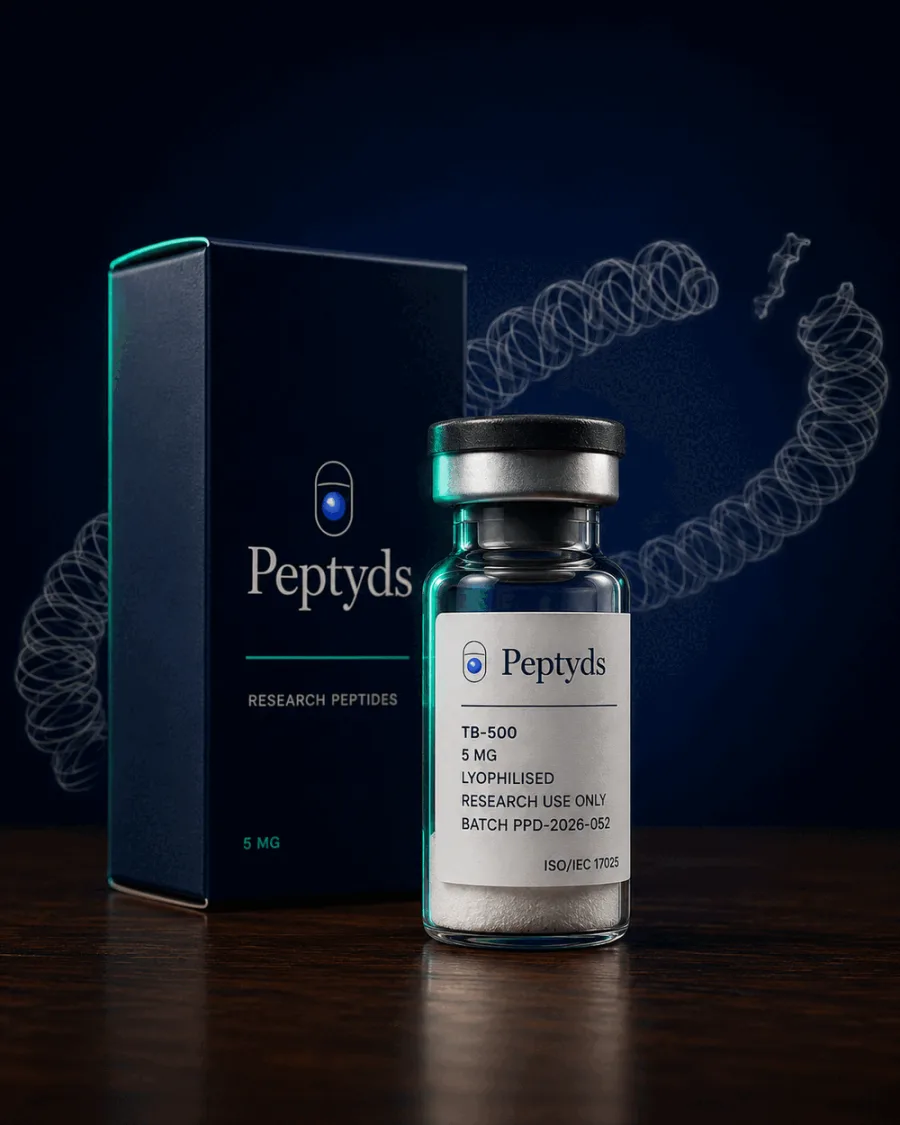
Thymosin Beta-4 fragment studied for tendon, ligament, and soft-tissue repair — a recovery-specialist peptide for high-demand training and rehabilitation routines.
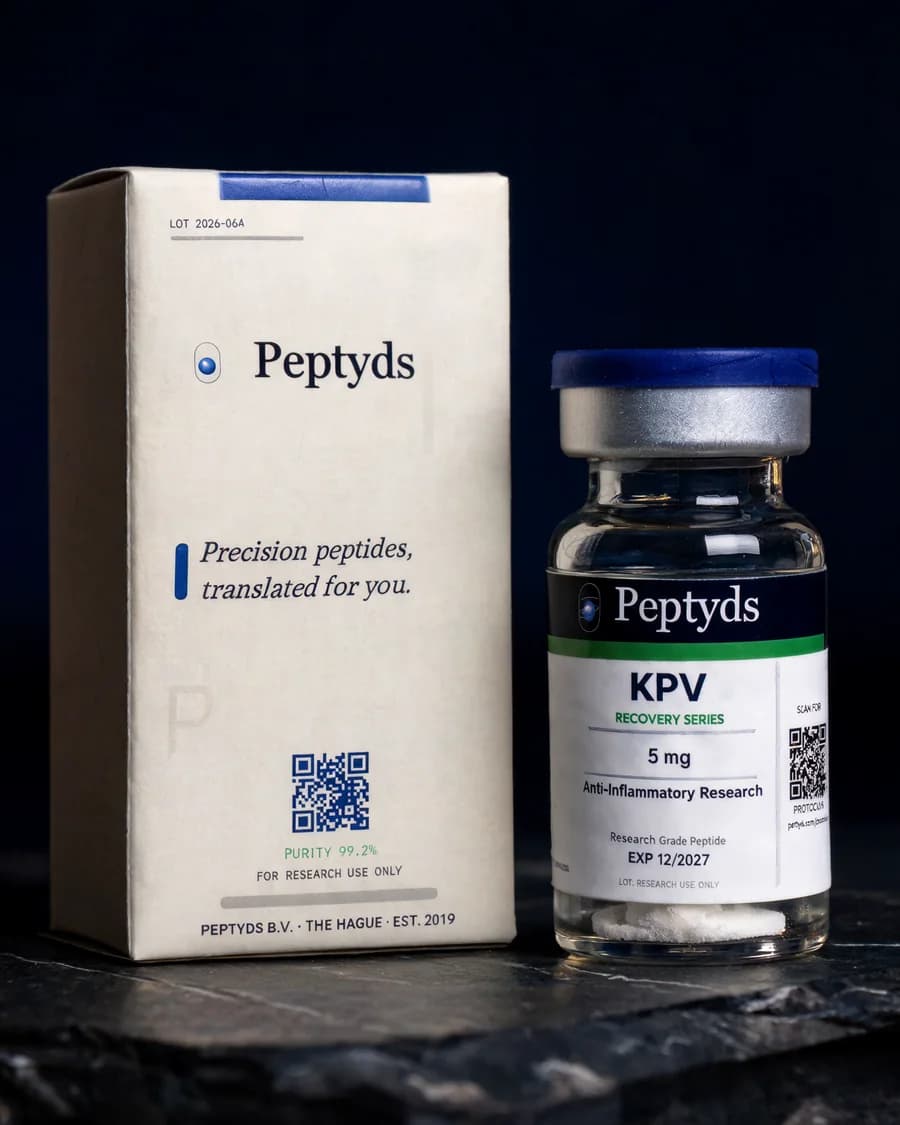
An alpha-MSH-derived tripeptide studied for its anti-inflammatory properties across gut, skin, and systemic inflammatory signalling pathways.
- recovery-pathways
- support-context
Each release is matched with quality documentation through a documented verification path. Identity, purity, and composition test results sit on the product page before you buy.
Every batch is verified by an ISO/IEC 17025-accredited laboratory before release. Identity, purity, and documentation travel with the product — not behind a form.
BPC-157 is one of the most-asked-about research peptides on the internet. The honest version of the story starts in a 1990s gastric-juice protein purification and ends with a regulatory map.
KLOW is an online name for GLOW (GHK-Cu, BPC-157 and TB-500) plus a fourth peptide, KPV. KPV has its own preclinical literature on inflammation; the four-peptide combination itself has no published study behind it.
KPV is a three-amino-acid fragment of alpha-MSH studied for anti-inflammatory signalling in gut, skin and immune research — distinct from tanning peptides like Melanotan II. Here is what the cited literature actually shows.
BPC-157 capsules are sold on a gastric-stability claim with real rodent evidence behind it — and no published human oral trial. Here is what the research record actually shows, and what a capsule label can't prove on its own.
Questions people ask about this category.
Honest, short answers to the things most shoppers want to know before they buy.
BPC-157 is a 15-amino-acid pentadecapeptide studied for localised soft-tissue and gut-lining repair via VEGFR-2 and nitric-oxide signalling, while TB-500 (Thymosin beta-4 fragment) is studied for systemic effects on cell migration and actin regulation. Both are sold strictly as research compounds — neither is approved by the EMA or FDA for human use, and both have been on the WADA prohibited list since 2022.
Bring both the lyophilised vial and the bacteriostatic water to room temperature, equalise pressure with a sterile vented needle, then inject the solvent slowly down the side of the vial. Swirl gently — never shake — until clear, and refrigerate at 2–8 °C.
The calculation is peptide mass (mg) ÷ desired concentration (mg/mL) = volume of bacteriostatic water in mL. For example, a 5 mg vial at 1 mg/mL needs 5 mL; at 2 mg/mL, 2.5 mL. Every Peptyds product page carries a suggested reconstitution volume tuned to the vial size.