

Immune-support peptides are short signaling molecules studied for thymic regulation, cytokine modulation, and adaptive immunity pathways in clinical research.
Immune Support
All products listed under this goal are supplied for in vitro laboratory research only and are not intended for human consumption or therapeutic use.
Peptides that support the body's immune balance — with proof on the label.
Peptides chosen to support the immune system's natural balance.
- How do peptides support the immune system?
- Which peptides belong in this category?
- What testing do they pass before they reach me?
A short list of peptides that fit this goal.
We keep the choice focused. Every peptide here has a clear purpose and a product page written without jargon.
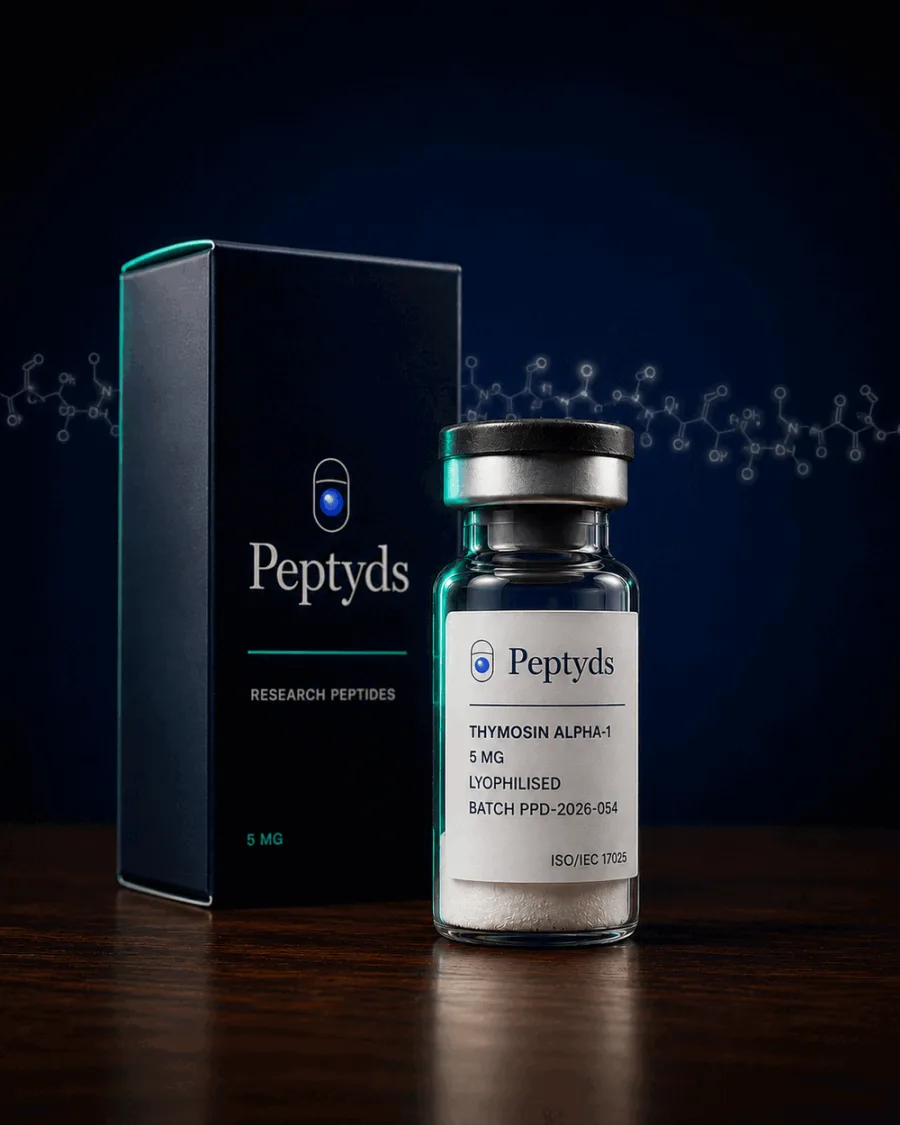
- immune-context
- quality-proof
Product pages contain product details and research information. Contact us if you have a question about an item.
Quality informationQuestions people ask about this category.
Honest, short answers to the things most shoppers want to know before they buy.
Published clinical research on thymalfasin (the synthetic form of thymosin alpha-1, marketed as Zadaxin in 35+ countries) has typically used 1.6 mg subcutaneously twice weekly for chronic viral hepatitis, with loading protocols up to 3.2 mg daily for seven days in severe immune-suppression contexts.
A prescription peptide (e.g. Wegovy, Mounjaro, Vyleesi, Zadaxin in the relevant jurisdictions) has been through EMA or national-authority review, carries an authorised indication, and is dispensed by a pharmacy against a script. A research peptide is a reference-grade compound sold for laboratory use only.
Bring both the lyophilised vial and the bacteriostatic water to room temperature, equalise pressure with a sterile vented needle, then inject the solvent slowly down the side of the vial. Swirl gently — never shake — until clear, and refrigerate at 2–8 °C.
The calculation is peptide mass (mg) ÷ desired concentration (mg/mL) = volume of bacteriostatic water in mL. For example, a 5 mg vial at 1 mg/mL needs 5 mL; at 2 mg/mL, 2.5 mL. Every Peptyds product page carries a suggested reconstitution volume tuned to the vial size.